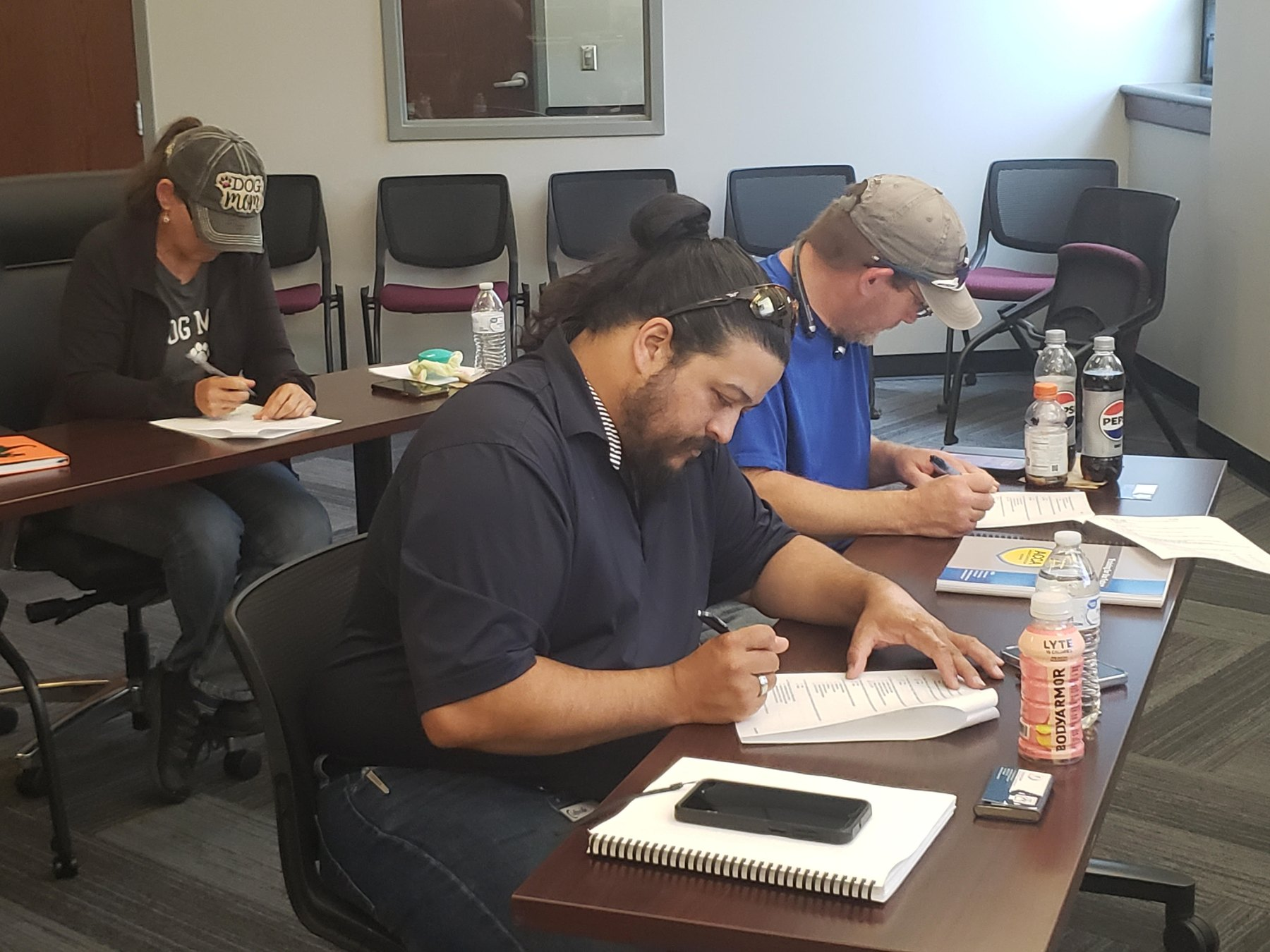
Practical training gives animal care and control professionals the knowledge, confidence, and qualifications to serve people and animals effectively.
Limited budgets, travel expenses, and low staffing can make professional development difficult. MaSA understands those constraints and works to make training practical, affordable, and accessible.
Training dollars are often limited or redirected by urgent operational needs.
Transportation, lodging, and meals can put valuable education out of reach.
Small teams need learning options that respect coverage and scheduling realities.
Animal care and control professionals are public servants. Communities receive safer, more consistent service when professionals have a strong training foundation and the confidence to apply it.
Certification provides evidence of training and qualifications. It can strengthen professional credibility during court proceedings and demonstrate that an animal care and control professional has been trained to perform assigned duties.
MaSA maintains a regional registry of certified animal care and control professionals. Qualified graduates receive a Certificate of Qualification with a registry identification number. Examination performance may also qualify graduates for distinguished or honor graduate recognition.
MaSA is supported by a board that helps guide the organization and its service to animal care and control professionals.
Training procedures and course materials are routinely reviewed and updated so instruction continues to reflect current professional practices. Board member details and JT Taylor’s expanded biography will be added after the client supplies the approved information.
Explore available training formats and certification pathways.